
Best Layer Cage Sizes for Small, Medium and Large Poultry Farms
Choosing the right layer cage size is one of the most important decisions when setting up a commercial egg-laying poultry farm. The correct cage system helps farmers use available space efficiently, manage birds easily, reduce feed wastage, improve egg collection and maintain good poultry-house conditions.
For farmers in Uganda and across Africa, layer chicken cages are available in different sizes, tiers and capacities. The best option depends on the number of birds, available poultry-house space, investment budget, ventilation, labor requirements and future expansion plans.
At Aaron Vet Farms Ltd, we help poultry farmers make informed decisions when selecting poultry equipment and designing efficient layer farming systems.
What Is a Layer Cage?
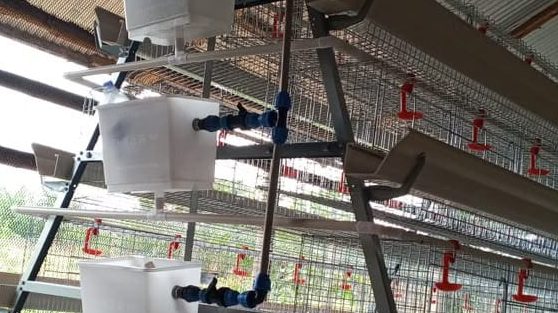
A layer cage is a specially designed housing system for chickens kept primarily for commercial egg production. Unlike deep-litter systems, battery or multi-tier layer cages divide birds into individual compartments and allow farmers to organize feeding, watering and egg collection more efficiently.
Common systems include A-type layer cages and H-type layer cages. A-type cages are widely used by small and medium-sized farms because of their relatively simple structure, while H-type systems are commonly considered for larger commercial operations requiring higher stocking capacity and automation.
Recommended Layer Cage Sizes by Farm Size
There is no single cage size that works for every poultry farm. Below is a practical guide based on farm scale.
Farm Size Approx. Number of Layers Recommended Cage Type Typical Capacity
Small farm 100–2,000 birds Small A-type / compact cage 90–160 birds/set
Medium farm 2,000–20,000 birds A-type 3–4 tier or H-type 120–192+ birds/set
Large farm 20,000+ birds H-type multi-tier 128–500+ birds/set
These figures are planning guidelines rather than universal standards. Actual capacity varies according to cage manufacturer, cell dimensions, number of tiers and stocking recommendations.
1. Best Layer Cages for Small Poultry Farms
Small poultry farms generally need a cage system that is affordable, easy to install and simple to manage.
For farmers keeping approximately 100 to 2,000 layers, compact A-type cages can be a practical choice. Common commercial A-type configurations range from approximately 90 to 160 birds per cage set, depending on the number of tiers and compartments.
For example, a four-tier A-type system may accommodate around 128 or 160 birds per set depending on its design. Some manufacturers list cage dimensions around 1.95–2.15 metres long, with the exact width and height varying by model.
Advantages for small farms include:
Lower initial investment
Easier manual feeding and egg collection
Simple maintenance
Efficient use of poultry-house space
Easy expansion as the flock grows
If you are starting with a small flock, avoid buying an oversized automated system simply because it has greater capacity. Choose equipment that matches your current production level while allowing room for expansion.
2. Best Layer Cages for Medium Poultry Farms
Medium poultry farms may keep between 2,000 and 20,000 laying hens. At this level, efficient space utilization and labor management become increasingly important.
A 3- or 4-tier A-type layer cage is often a suitable option. Depending on the model, these systems can hold approximately 120–160 birds per set. Some H-type configurations can accommodate 120, 144, 160 or 192 birds per set.
For a medium-sized commercial farm, farmers should consider:
Number of birds
Poultry-house dimensions
Number of cage rows
Central and side walkways
Feed and water systems
Manure management
Egg collection arrangements
Ventilation
Future expansion
A properly planned cage layout can make daily poultry operations much easier. It also prevents farmers from purchasing cages that cannot fit comfortably inside the poultry house.
3. Best Layer Cages for Large Poultry Farms
Large commercial farms require a different approach. When the flock reaches tens of thousands of layers, land utilization, labor efficiency, automation and manure management become major considerations.
For these operations, H-type layer cages are often attractive because they can be stacked vertically and integrated with automated feeding, watering, egg collection and manure-removal systems. H-type systems are available in several configurations, including four, five, six and eight tiers or more.
Some commercial H-type systems provide approximately 128 birds per set in four-tier configurations, with capacity increasing as additional tiers are added. Other designs provide 160, 192, 240 or more birds per set.
For large farms, however, choosing the tallest cage available is not automatically the best decision. The poultry house must have adequate height, ventilation and safe access for workers. The complete system should be designed around the farm’s production capacity.
A-Type vs H-Type Layer Cages
The choice between A-type and H-type cages depends largely on the scale and objectives of the farm.
A-type layer cages generally have a sloping or A-shaped arrangement and are popular for small and medium farms. They can have three to five tiers depending on the design.
H-type layer cages use a vertical arrangement and can support more tiers. They are particularly useful where maximizing vertical space and automation are priorities.
For a farmer starting a relatively small egg-production business, an A-type cage may provide a simpler entry point. For a large commercial operation, an H-type system may provide greater opportunities for automation and efficient use of floor space.
How to Choose the Correct Layer Cage Size
Before purchasing layer cages for poultry farming, consider these five factors:
1. Number of Birds
Calculate your flock size first. A cage designed for 160 birds per set, for example, would require approximately 63 sets for 10,000 birds before allowing for any design adjustments.
2. Available Poultry-House Space
Measure the length, width and height of your poultry house. Cage dimensions alone are not enough. You also need adequate space for workers, feeding systems, ventilation and egg collection.
3. Bird Welfare and Stocking Density
Do not choose a cage simply because it holds the highest number of chickens. Cell dimensions and stocking density should be appropriate for the birds and consistent with applicable poultry-welfare and management requirements.
4. Budget
A-type systems may be more accessible for farmers with limited starting capital, while automated H-type systems generally require a larger investment.
5. Future Expansion
Think beyond today’s flock. If you plan to expand from 2,000 to 10,000 or 20,000 layers, select a cage and poultry-house design that can support future growth.
Why Choose Aaron Vet Farms Ltd?
Setting up a successful layer farm requires more than buying cages. Farmers need the right poultry equipment, housing design, feeding systems, watering systems and flock-management practices.
Aaron Vet Farms Ltd supports poultry farmers with practical solutions for modern poultry production. Whether you are establishing a small layer farm or planning a larger commercial egg-production project, choosing the correct cage size can make a significant difference to farm efficiency and long-term profitability.
Final Thoughts
The best layer cage size for a poultry farm depends on the number of birds, available space, budget and management system. Small farms can benefit from compact A-type cages, medium farms can consider 3- or 4-tier A-type or suitable H-type systems, while large commercial farms may benefit from multi-tier H-type cages and automation.
Most importantly, don’t choose a cage based on capacity alone. A good poultry cage should provide appropriate space for birds while allowing efficient feeding, watering, egg collection, cleaning and ventilation.
If you are planning a layer poultry farm in Uganda, Aaron Vet Farms Ltd can help you identify a suitable poultry housing and cage solution based on your flock size and farm objectives.