
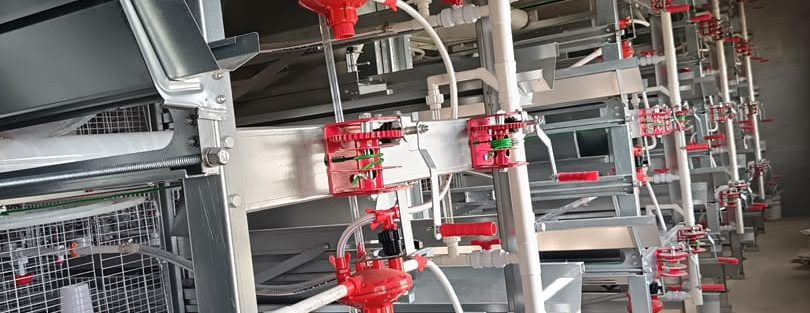
Types of Poultry Cages and Their Uses in Modern Layer Farming
Poultry farming has become an increasingly important agricultural enterprise in Uganda and across Africa. As farmers move from traditional free-range systems to modern commercial layer farming, choosing the right housing system is essential for improving productivity, bird management, hygiene, and profitability.
One of the most widely used housing solutions is the poultry cage system. Poultry cages allow farmers to organize laying hens efficiently while making feeding, watering, egg collection, cleaning, and health monitoring easier.
However, not all poultry cages are the same. Different cage designs are suitable for different farm sizes, production goals, budgets, and management systems. Understanding the types of poultry cages and their uses can help farmers make better investment decisions.
At Aaron Vet Farms Ltd, we support poultry farmers with practical knowledge and solutions for successful and sustainable poultry production.
What Are Poultry Cages?
Poultry cages are specially designed housing structures used to keep chickens, particularly laying hens, in organized compartments. They are commonly made from galvanized steel wire and are designed with feeding, watering, egg collection, and manure management systems.
Cage systems are particularly popular in commercial layer farming because they can accommodate many birds within a relatively small space while allowing farmers to manage their flock efficiently.
Depending on their design and level of automation, poultry cages can range from simple manually operated systems to advanced commercial cage systems with automated feeding, drinking, egg collection, and manure removal.
1. Battery Poultry Cages
Battery cages are among the most commonly recognized cage systems in commercial layer farming. They consist of rows of individual or small-group compartments arranged in a structured system.
Each compartment provides space for laying hens and normally includes a feeding trough and drinking system. The floor is designed to allow eggs to roll toward the front of the cage, making egg collection easier.
Uses of Battery Cages
Battery cages are commonly used for:
Commercial egg production
Medium- and large-scale layer farms
Efficient use of poultry house space
Easy egg collection
Improved monitoring of individual birds
Reducing contact between birds and manure
Battery cage systems can be particularly useful where farmers want to maximize production capacity within limited housing space.
2. A-Type Poultry Cages
A-type cages are named after their characteristic A-shaped arrangement. Cage tiers are positioned in a way that creates an A-like structure when viewed from the side.
They are widely used by commercial poultry farmers because they are relatively simple to operate and can accommodate several birds in multiple cage rows.
Uses of A-Type Cages
A-type poultry cages are suitable for:
Small- to medium-scale layer farms
Commercial egg production
Farmers seeking relatively simple cage management
Farms using manual feeding and egg collection
Efficient utilization of poultry house space
One of the major advantages of A-type systems is their straightforward design, which can make them easier for farmers and workers to understand and manage.
3. H-Type Poultry Cages
H-type poultry cages are another popular option for modern layer farming. They are arranged vertically, usually in multiple tiers, and are often associated with larger commercial farms.
The H-type system can be designed with integrated feeding, drinking, egg collection, and manure management equipment.
Uses of H-Type Cages
H-type cages are particularly useful for:
Large commercial layer farms
High-density poultry production
Automated poultry operations
Farms with limited floor space
Farmers seeking improved labor efficiency
Because H-type cages can have several levels, they can significantly increase the number of birds housed within a poultry building.
4. Enriched or Furnished Cages
Enriched cages are designed to provide laying hens with additional features intended to improve their housing environment. Depending on the design, they may include areas for perching, nesting, and other bird behaviors.
These systems are increasingly discussed as farmers and the poultry industry pay greater attention to animal welfare and responsible poultry production.
Uses of Enriched Cages
Enriched cages may be appropriate for:
Farmers prioritizing improved bird welfare
Specialized commercial egg production
Farms targeting markets with specific welfare requirements
Modern poultry enterprises seeking improved housing standards
Farmers should always consider their target market and applicable regulations when choosing a cage system.
5. Brooder and Chick Cages
Although most poultry cage discussions focus on laying hens, specialized cages can also be used for young chicks during certain stages of production.
Brooder systems provide controlled housing conditions where chicks can receive appropriate warmth, feeding, and drinking.
Uses of Chick Cages
They can be used for:
Brooding young chicks
Controlled early-stage management
Protecting chicks from predators
Monitoring feed and water consumption
Maintaining better hygiene
However, the housing system should always be appropriate for the age and developmental stage of the birds.
Benefits of Poultry Cages in Modern Layer Farming
Choosing suitable poultry cages for layers can provide several management advantages.
Better Use of Space
Cage systems allow farmers to keep more birds in a well-organized poultry house compared with some traditional housing arrangements.
Easier Egg Collection
Most commercial layer cages are designed so that eggs roll toward an accessible collection area. This can reduce the time required to collect eggs and may help reduce egg breakage.
Improved Hygiene
Birds have less direct contact with manure when properly managed in cages. This can contribute to cleaner housing conditions and easier manure management.
Easier Monitoring
Cages make it easier for farmers and attendants to observe birds, identify sick or injured hens, and monitor production.
Efficient Feeding and Watering
Modern cage systems can incorporate organized feeding troughs and nipple drinking systems, helping farmers provide feed and water consistently.
Better Production Management
With organized housing, farmers can more easily monitor flock performance, egg production, mortality, feed consumption, and other important farm records.
How to Choose the Right Poultry Cage
Before investing in a layer poultry cage system, farmers should consider several factors.
Farm size: Determine how many birds you intend to keep now and in the future.
Budget: Compare the initial investment with expected benefits, maintenance requirements, and operating costs.
Labor availability: Automated systems may reduce manual work but require greater investment and technical management.
Poultry house design: The cage system should fit properly within the available building.
Bird welfare: Ensure that the chosen system provides appropriate space, ventilation, feeding, drinking, and management conditions.
Availability of spare parts: Choose equipment that can be maintained and repaired easily.
Future expansion: Consider whether the system can accommodate future growth of the farm.
Conclusion
Selecting the right types of poultry cages is an important decision for anyone planning or operating a modern layer farm. Battery cages, A-type cages, H-type cages, enriched cages, and specialized chick housing systems each have different applications and advantages.
A good cage system should not only maximize space but also support proper feeding, watering, hygiene, egg collection, health monitoring, and efficient farm management.
For farmers planning to establish or upgrade a commercial layer farm in Uganda, professional guidance is valuable when selecting poultry housing, equipment, feeding programs, vaccination schedules, and other farm-management solutions.
Aaron Vet Farms Ltd is committed to supporting poultry farmers with practical knowledge and professional solutions designed to improve poultry health, productivity, and farm profitability.
For more information about poultry farming solutions, layer management, poultry equipment, and veterinary support, contact Aaron Vet Farms Ltd.