
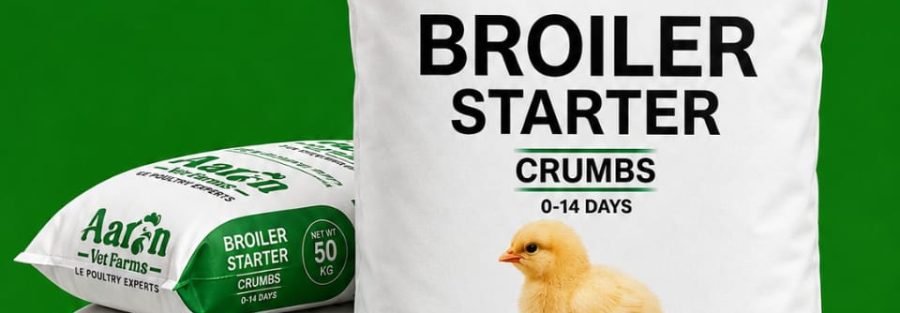
Different Feed Types and Their Importance in Poultry Farming
Poultry feeding is one of the most important factors determining the success of a poultry farming business. Whether you keep broilers for meat, layers for egg production, or dual-purpose chickens, providing the right feed at the right stage of growth helps improve productivity, maintain good health, and increase farm profitability.
In Uganda, poultry farmers face challenges such as rising feed prices, poor-quality feeds, nutritional deficiencies, and feed wastage. Understanding the different types of poultry feed and their importance can help farmers make better feeding decisions and manage production costs effectively.
At Aaron Vet Farms Ltd, we encourage poultry farmers to prioritize balanced nutrition, quality feed ingredients, clean drinking water, and proper feeding management. This guide explains the major types of poultry feed, their nutritional importance, and how to use them effectively on your farm.
1. Chick Starter Feed
Chick starter feed is specially formulated for young chicks during their early growth stage. It provides the nutrients needed for muscle development, feather growth, immune function, and healthy organ development.
For many broiler production systems, starter feed is provided during approximately the first 10–14 days, although the exact period depends on the breed and feeding programme. Layer chicks may receive starter feed for several weeks according to the manufacturer’s instructions and the recommended rearing programme.
Importance of chick starter feed
Supports rapid and healthy early growth.
Supplies essential amino acids for tissue development.
Provides energy for daily activity and body maintenance.
Supports immune function when combined with good management.
Helps chicks establish a strong foundation for later production.
Farmers should purchase starter feed from reputable suppliers and ensure that it is appropriate for the type and age of their chicks. Always provide clean drinking water and maintain suitable brooding temperatures.
2. Grower Feed
Grower feed is designed for poultry that have passed the initial chick stage but have not yet reached their final production stage.
It is particularly important for replacement layer pullets and breeder birds. The nutrient balance supports steady growth while helping farmers avoid excessive body weight gain.
Importance of grower feed
Supports the development of muscles, bones, and feathers.
Helps pullets develop into healthy future laying hens.
Provides balanced energy and protein for continued growth.
Helps maintain appropriate body weight when feeding is well managed.
Prepares birds for the next stage of production.
Layer growers should not automatically be fed high-calcium layer mash intended for actively laying hens. Young birds have different calcium requirements, so using the correct feed is essential.
Follow the feed manufacturer’s guidance and monitor body weight to determine whether birds are growing as expected.
3. Broiler Finisher Feed
Broiler finisher feed is intended for meat chickens during the final stage of growth before marketing. It provides the nutrients required to support continued weight gain and efficient meat production.
The age at which farmers introduce finisher feed varies by breed, market weight, and the manufacturer’s feeding programme.
Importance of broiler finisher feed
Supports muscle development and final body weight.
Supplies energy needed for continued growth.
Provides essential amino acids for meat production.
Helps farmers meet target market weights.
Supports efficient feed use when the diet is correctly formulated.
Farmers should avoid changing feeds too frequently without a clear reason. They should also follow any veterinary medicine withdrawal periods and applicable food safety requirements before selling birds for slaughter.
4. Layer Mash or Layer Pellets
Layer feed is specially formulated for hens that are producing eggs. It contains the appropriate balance of energy, protein, amino acids, vitamins, minerals, and calcium required for egg production.
Layer feed is available in different physical forms, including mash and pellets or crumbles, depending on the manufacturer.
Importance of layer feed
Supports consistent egg production.
Supplies calcium for strong eggshell formation.
Provides protein and amino acids for egg formation.
Helps maintain the body condition of laying hens.
Supports good egg size and quality when combined with proper management.
A lack of calcium may result in thin or weak eggshells, but eggshell problems can also be caused by disease, age, heat stress, or other nutritional imbalances.
Farmers should provide a complete layer ration, fresh water, appropriate lighting, and good ventilation. Avoid feeding layer mash to young chicks because its nutrient balance is not suitable for their developmental stage.
5. Chick Mash, Growers Mash, and Layers Mash
Mash refers to poultry feed in a ground or meal-like form rather than a pellet. The term describes the physical form of feed, not a specific nutritional formula.
Chick mash, growers mash, and layers mash are formulated for different production stages.
Importance of mash feeds
Can be easier to produce and supply in many farming systems.
Allow farmers to select a formulation appropriate for each age group.
Can support good growth and production when properly formulated.
May be suitable for farms that prefer non-pelleted feeds.
However, mash quality depends on the ingredients, formulation, particle size, mixing, and storage conditions. Birds may sort feed if it is poorly mixed, potentially consuming some ingredients more than others.
Always check the label to confirm that the feed matches your birds’ age and production purpose.
6. Poultry Pellets and Crumbles
Pelleted feeds are manufactured by compressing a formulated feed mixture into small pieces. Crumbles are smaller broken pieces of pellets and are often used for young birds.
These feeds can reduce selective feeding and may improve feed intake and handling, depending on their quality and the birds’ age.
Importance of pellets and crumbles
Provide a more uniform mixture of nutrients in each piece.
Can reduce ingredient separation and selective feeding.
May reduce some forms of feed wastage.
Can support efficient feeding in commercial poultry systems.
Crumbles can be convenient for young chicks when appropriately sized.
Pellets are not automatically more nutritious than mash. The quality of the formulation, processing, storage, and feeding programme remains important.
Choose a suitable feed form based on bird age, equipment, availability, and overall production costs.
7. Poultry Concentrates
Poultry concentrate is a nutrient-rich feed ingredient mixture designed to be combined with specified energy ingredients, such as maize, according to the manufacturer’s formulation instructions.
Concentrates may supply protein, amino acids, vitamins, minerals, and other nutrients, depending on the product.
Importance of poultry concentrates
Help farmers formulate complete feeds when they have suitable mixing facilities.
Provide nutrients that may be limited in locally available ingredients.
Can offer flexibility in feed production.
May reduce dependence on purchasing complete commercial feeds when correctly used.
Important: Concentrates must be mixed according to the manufacturer’s exact instructions. They are not necessarily complete feeds and should not be fed alone unless the product label explicitly says they are suitable for direct feeding.
Incorrect mixing can create nutritional deficiencies, excesses, and poor bird performance.
8. Supplementary Feeds: Vitamins and Minerals
Poultry require vitamins and minerals in small quantities for normal growth, bone development, metabolism, immune function, and egg production.
Commercial complete feeds should already contain the nutrients required for their intended use when properly formulated and manufactured.
Additional supplements may be appropriate in specific circumstances, such as a diagnosed deficiency, heat stress management programme, or veterinary recommendation.
Importance of vitamin and mineral supplements
Support normal growth and metabolic functions.
Contribute to bone development and eggshell formation.
Help correct specific nutritional deficiencies.
May support birds during certain periods of stress when appropriately selected.
Supplements cannot compensate for poor-quality feed, inadequate water, overcrowding, or an untreated disease. Avoid combining several products without checking their ingredients, as excessive levels of certain vitamins and minerals can be harmful.
9. Grit and Calcium Supplements
Grit and calcium supplements serve different purposes and should not be confused.
In birds fed whole grains or other coarse ingredients, insoluble grit can help the gizzard grind feed. Poultry consuming properly formulated commercial feeds may not need additional grit, depending on their diet.
Calcium sources, such as suitable limestone or oyster shell products, are particularly important for laying hens because eggshell production requires substantial calcium.
Importance
Appropriate grit can assist mechanical digestion when required.
Calcium supports eggshell formation and bone health.
Correct mineral management helps maintain production and bird welfare.
Use poultry-appropriate products and seek professional advice before adding supplements to a complete ration.
10. How to Choose the Right Poultry Feed
Selecting the correct feed is just as important as knowing the different feed types.
Consider these practical guidelines:
Know your poultry type: Broilers, layers, and breeders have different nutritional requirements.
Check the age of your birds: Use starter, grower, finisher, or layer feed as appropriate.
Buy from reliable suppliers: Check packaging, labels, manufacture dates, and expiry or best-before information where provided.
Inspect storage conditions: Reject feed that is mouldy, damp, contaminated, or has an unusual smell.
Store feed properly: Keep it dry, protected from pests, and away from chemicals.
Prevent wastage: Adjust feeders to bird height and avoid overfilling them.
Provide clean water: Poor water access can reduce feed intake and production.
Monitor performance: Track body weight, feed consumption, egg production, mortality, and overall costs.
Farmers who mix their own feeds should use reliable ingredient analysis and properly balanced formulations. Maize bran or other individual ingredients should not be treated as complete poultry diets.
Conclusion
Different poultry feed types serve different purposes, from supporting early chick development to promoting broiler growth and maintaining egg production in laying hens. Starter feed, grower feed, finisher feed, layer mash, pellets, concentrates, and targeted supplements all have roles in poultry nutrition when selected and used correctly.
For poultry farmers in Uganda, the key to successful feeding is choosing quality products, matching feed to the birds’ stage of growth, minimizing wastage, and monitoring production performance.
Aaron Vet Farms Ltd encourages farmers to make informed feeding decisions and seek professional advice when developing poultry nutrition programmes. Proper feeding management can help build healthier flocks, improve productivity, and support a more sustainable poultry farming business.