
How to Calculate the Return on Investment of Poultry Cages
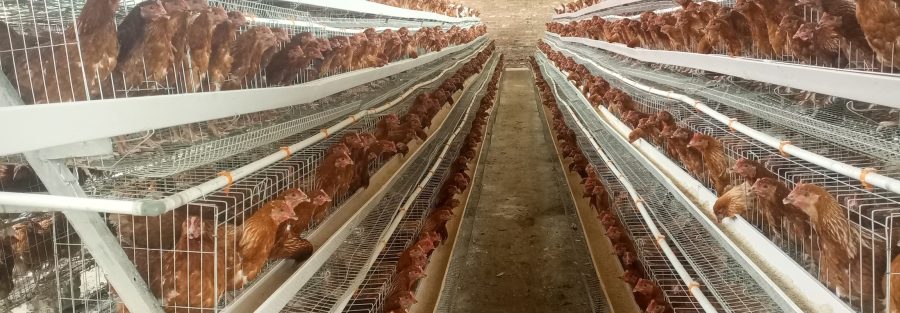
Investing in poultry cages is one of the biggest decisions a commercial layer farmer can make. Modern layer cages can help farmers use space efficiently, reduce feed wastage, simplify egg collection and improve day-to-day flock management. However, before purchasing cages, it is important to determine whether the investment will generate enough additional income to justify the cost.
At Aaron Vet Farms Ltd, we encourage poultry farmers to treat cage farming as a business investment rather than simply an equipment purchase. Understanding your return on investment (ROI) allows you to compare the cost of poultry cages with the additional income and savings they can generate over their useful life.
What Is Poultry Cage ROI?
Return on Investment (ROI) measures how much profit an investment generates compared with the amount invested.
The basic formula is:
ROI (%) = (Net Profit ÷ Total Investment) × 100
For poultry cages, your investment should include more than the purchase price. Consider the cost of:
Layer chicken cages
Transport
Installation
Feeders and drinkers
Egg collection equipment
Poultry house modifications
Lighting and electrical installation
Water systems
Maintenance
Other cage-related equipment
Calculating the complete investment gives you a more realistic picture of profitability.
Why Calculate ROI Before Buying Poultry Cages?
Many farmers focus only on the price of poultry cages in Uganda. However, the cheapest cage is not necessarily the most profitable option.
A good cage system should help you improve productivity and reduce avoidable costs. Commercial layer farming depends heavily on efficient feed use, flock health, egg production and labor management. Aaron Vet Farms’ layer-farming guidance also emphasizes record keeping, proper housing, nutrition and disease prevention as important factors in profitability.
Before investing, ask:
How many birds can the cages accommodate?
How much will the complete cage system cost?
How long will the cages last?
Will the system reduce labor costs?
Will it reduce feed wastage?
Will it improve egg collection and reduce broken eggs?
What additional revenue can the cage system generate?
How quickly can the investment be recovered?
Step 1: Calculate the Total Cost of the Poultry Cage Investment
Start by adding all cage-related expenses.
For example, suppose a farmer wants to install a cage system for 1,000 layers.
Imagine the total investment is:
Investment Example Cost
Poultry cages UGX 12,000,000
Transport UGX 800,000
Installation UGX 700,000
Feeders/drinkers and accessories UGX 1,000,000
House modifications UGX 2,000,000
Total Investment UGX 16,500,000
These figures are only an illustration. Actual layer cage prices in Uganda should be obtained from suppliers based on cage capacity, specifications and installation requirements.
Step 2: Estimate the Income Generated by the Flock
The next step is to estimate egg production.
Suppose 1,000 layers achieve an average laying rate of 85%.
That means:
1,000 × 85% = 850 eggs per day
Since a tray contains 30 eggs:
850 ÷ 30 = approximately 28 trays per day
If the average selling price is UGX 10,000 per tray:
28 × UGX 10,000 = UGX 280,000 daily revenue
Monthly gross egg revenue would be approximately:
UGX 280,000 × 30 = UGX 8,400,000
Remember that this is gross revenue, not profit. Feed, labor, veterinary care, electricity, water, transport and other operating costs must still be deducted.
Egg production varies considerably according to breed, age, nutrition, health and management. Commercial layer guides commonly cite production in the range of roughly 280–320 eggs per bird annually under good management.
Step 3: Calculate the Savings Created by Poultry Cages
The value of cages is not limited to egg sales.
A well-designed cage system may provide savings through:
Reduced Feed Wastage
Feed is one of the largest expenses in layer farming. Better-controlled feeding can reduce unnecessary wastage and improve feed efficiency.
Lower Labor Requirements
Cages can make feeding, cleaning, monitoring and egg collection easier, especially on larger farms.
Reduced Egg Breakage
Eggs can be collected more efficiently, potentially reducing losses caused by birds stepping on eggs or poor collection practices.
Better Use of Space
Multi-tier cage systems allow farmers to keep more birds within a given poultry house compared with some traditional housing arrangements.
Easier Manure Management
Many cage systems allow manure to be collected more conveniently, creating an additional farm by-product that can sometimes be sold or used as fertilizer.
Step 4: Calculate Annual Net Profit
Suppose the cage system contributes an estimated UGX 6,000,000 in additional annual net profit or savings after accounting for the relevant operating costs.
Your investment was:
UGX 16,500,000
Annual return:
UGX 6,000,000
ROI for the first year:
(UGX 6,000,000 ÷ UGX 16,500,000) × 100 = 36.4%
This means the investment generates an estimated return equivalent to about 36.4% of the original investment per year, based on the assumptions in this example.
Step 5: Calculate the Payback Period
Another important calculation is the payback period.
The formula is:
Payback Period = Initial Investment ÷ Annual Net Cash Benefit
Using our example:
UGX 16,500,000 ÷ UGX 6,000,000 = 2.75 years
Therefore, the farmer would theoretically recover the cage investment in approximately 2 years and 9 months, assuming the estimated annual benefit remains consistent.
Factors That Can Increase Poultry Cage ROI
Farmers can improve their return on investment by focusing on:
Buying quality layer cages
Choosing productive layer breeds
Maintaining good ventilation
Providing balanced layer feed
Reducing feed wastage
Maintaining clean drinking water
Following vaccination and disease-prevention programs
Monitoring mortality
Keeping accurate production records
Reducing egg breakage
Selling eggs to reliable markets
Maintaining cages properly
Good management is critical. A cage system cannot compensate for poor-quality feed, disease problems, overcrowding or inadequate ventilation.
Cage Farming vs Deep Litter: Which Is More Profitable?
The answer depends on the farm’s scale, management and investment capacity.
Deep litter can have lower initial infrastructure costs and may be suitable for small-scale farmers. Cage systems, however, can provide better space utilization and operational efficiency for commercial layer production.
Research from Makerere University comparing egg production systems in Wakiso District found that battery cages had a higher gross-margin ratio than deep litter, although cage systems required higher initial investment.
Therefore, farmers should not judge a production system purely by its startup cost. Instead, compare total investment, operating costs, productivity, revenue, lifespan and profitability.
Final Thoughts
Calculating the ROI of poultry cages helps farmers make informed investment decisions and avoid purchasing equipment without understanding its financial benefits.
Before investing in layer chicken cages in Uganda, calculate the total purchase and installation cost, estimate egg production, identify potential labor and feed savings, calculate annual net returns and determine the payback period.
At Aaron Vet Farms Ltd, our goal is to help poultry farmers make practical decisions that support productive and sustainable poultry businesses. Whether you are starting with a small layer unit or planning a commercial poultry farm, proper budgeting, quality equipment, good nutrition and professional poultry management can make a major difference.
Do not ask only, “How much do poultry cages cost?” Ask, “How much can these cages earn or save for my farm, and how long will it take to recover my investment?”
That is the foundation of a profitable poultry cage investment.