
Poultry Cage Farming vs Deep Litter: Which Is More Profitable?
Poultry farming in Uganda is one of the most promising agribusiness opportunities for farmers looking to generate income from eggs and poultry meat. However, choosing the right housing system can significantly affect production costs, bird health, labor requirements, and profitability.
Two of the most common poultry production systems are poultry cage farming and the deep litter system. But which one is more profitable?
The answer depends on your farming goals, available capital, land, labor, and the type of poultry you intend to keep. In this guide, Aaron Vet Farms Ltd compares poultry cage farming and deep litter farming to help farmers make an informed investment decision.
What Is Poultry Cage Farming?
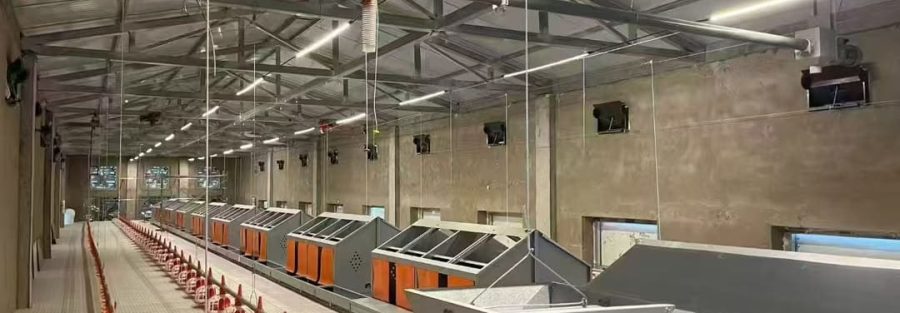
Poultry cage farming involves keeping birds in specially designed cages, usually arranged in rows or tiers inside a poultry house. Each cage provides birds with a controlled space for feeding, drinking, resting, and laying eggs.
Cage systems are particularly common in commercial layer farming, where farmers focus on maximizing egg production from a limited amount of space.
One major advantage of cage farming is efficient use of land. A farmer can keep a relatively large number of birds in a smaller poultry house compared with some floor-based systems.
Cages can also make egg collection easier because eggs are laid on platforms that allow them to roll into accessible collection areas.
What Is Deep Litter Poultry Farming?
The deep litter system involves keeping poultry on the floor of a poultry house covered with materials such as wood shavings, coffee husks, rice husks, or chopped straw.
The litter absorbs moisture and manure and is periodically managed or replaced. Birds move freely around the poultry house and have greater opportunity to walk, scratch, and exhibit natural behaviors.
Deep litter farming is widely used for broilers, layers, and local chicken farming in Uganda.
For farmers starting on a smaller scale, deep litter can be attractive because the initial housing setup may be simpler and less expensive than installing commercial cages.
Poultry Cage Farming vs Deep Litter: Key Differences
1. Initial Investment
Cage farming generally requires a higher initial investment. Farmers need to purchase or construct cages, install appropriate feeding and drinking systems, and design the poultry house to accommodate the cages.
Deep litter farming can have a lower startup cost because farmers primarily need a suitable poultry house, feeders, drinkers, and litter materials.
Winner for lower startup capital: Deep litter.
2. Use of Space
Cage farming has an advantage when it comes to space efficiency. Multiple cage levels can allow farmers to keep more birds within a relatively small poultry house.
Deep litter birds require more floor space because they move freely around the house.
For farmers with limited land who want to operate a commercial poultry farm, cages can therefore be an attractive option.
Winner for space efficiency: Cage farming.
3. Egg Production
For commercial layers, cage systems can make egg collection more efficient and reduce the number of eggs lost or damaged on the floor.
However, egg production ultimately depends on several factors, including breed, nutrition, vaccination, disease control, lighting, water availability, and overall management.
A poorly managed cage system will not automatically be more productive than a well-managed deep litter farm.
Winner for commercial egg-production efficiency: Cage farming.
4. Labor Requirements
Cage systems can simplify certain routine activities, particularly feeding, watering, and egg collection when the farm is properly designed.
Deep litter systems may require more attention to litter management, cleaning, manure removal, and maintaining appropriate floor conditions.
However, labor requirements vary considerably depending on the size and level of mechanization of the farm.
Potential advantage: Cage farming.
5. Manure Management
Deep litter produces a mixture of poultry manure and litter that can be valuable as organic fertilizer. Farmers can use it on crops or sell it to other agricultural producers.
Cage systems can also provide valuable poultry manure, but collection methods differ depending on the cage design.
Proper manure management is important in both systems because accumulated waste can contribute to unpleasant odors, flies, ammonia, and disease risks.
Which System Is More Profitable?
There is no single answer for every farmer.
Cage farming may be more profitable for commercial layer farmers who have sufficient capital, good markets for eggs, reliable feed supplies, and efficient farm management.
The system can provide excellent space utilization and efficient egg collection, which may improve operational efficiency as the flock grows.
On the other hand, deep litter farming can be more profitable for farmers with limited startup capital, especially those producing broilers, dual-purpose birds, or smaller numbers of layers.
The profitability of either system should be calculated using actual farm figures rather than assuming that one housing system is automatically superior.
Factors That Determine Poultry Farm Profitability
Whether you choose cages or deep litter, the following factors have a major influence on your returns:
Feed Costs
Feed is one of the largest expenses in poultry production. Good-quality feed formulated according to the birds’ age and production stage is essential.
Farmers should avoid compromising feed quality simply to reduce costs because poor nutrition can lead to slow growth, poor egg production, and increased production losses.
Bird Mortality
Every bird lost represents an investment that may not generate income. Proper vaccination, biosecurity, hygiene, disease monitoring, and veterinary support are therefore essential.
Market Prices
Before investing in poultry farming, identify your target market. Egg and chicken prices can fluctuate depending on location, season, supply, and demand.
A profitable poultry business needs a reliable market rather than simply a large number of birds.
Housing and Equipment
Good poultry housing protects birds from extreme weather, predators, and disease risks while providing adequate ventilation, lighting, feeding, and drinking facilities.
Record Keeping
Farm records help farmers understand whether the business is actually making money. Keep records of:
Number of birds purchased
Feed consumption
Vaccination and veterinary costs
Mortality
Egg production or live bird sales
Labor costs
Housing and equipment expenses
Sales revenue
With accurate records, a farmer can calculate cost per bird, cost per tray of eggs, gross income, and net profit.
Cage Farming or Deep Litter: Which Should You Choose?
Choose cage farming if you are planning a commercial layer enterprise, have adequate startup capital, want to maximize space utilization, and have a strong market for eggs.
Choose deep litter farming if you have limited capital, want greater flexibility, are keeping broilers or smaller flocks, or prefer a floor-based production system.
For either system, success depends more on good management than on the housing system alone.
Start Your Poultry Farm With the Right Advice
Choosing between cage farming and deep litter is an important decision, but it is only one part of building a profitable poultry enterprise.
At Aaron Vet Farms Ltd, farmers can access practical guidance on poultry management, vaccination, biosecurity, feeding, disease prevention, and other aspects of successful poultry production.
Whether you are planning a small poultry project or a commercial farm, proper planning before purchasing birds can help you avoid unnecessary losses and improve your returns.
Final Verdict:
Cage farming can offer greater profitability and efficiency for well-managed commercial layer farms, particularly where space and egg collection efficiency are important. Deep litter, however, can provide a more affordable entry point and remains an excellent option for broilers, local chickens, and smaller poultry enterprises.
The most profitable poultry system is ultimately the one that matches your budget, market, management capacity, and production goals.