
Signs of Heat in Sows and the Best Time for Mating
Successful pig farming depends heavily on good reproductive management. One of the most important skills for every pig farmer is knowing how to identify heat in sows and choosing the right time for mating or artificial insemination. Missing the correct breeding window can lead to repeat services, low conception rates, smaller litters, and increased production costs.
A sow’s reproductive cycle is approximately 21 days, although it can vary between individual animals. After weaning, most healthy sows come into heat within about 3–7 days. Recognizing the signs of heat early allows farmers to mate the sow at the most appropriate time and improve reproductive performance.
At Aaron Vet Farms Ltd, we encourage farmers to combine proper heat detection, good nutrition, disease prevention, quality breeding stock, and professional veterinary advice for better pig production.
What Is Heat in a Sow?
Heat, also called estrus, is the period when a female pig is sexually receptive and can become pregnant. During this period, hormonal changes cause the sow to develop behavioral and physical signs that indicate she is ready for breeding.
Estrus commonly lasts around 48–72 hours in mature sows, although the exact duration can vary. Ovulation normally occurs during the latter part of estrus, which is why the timing of mating is extremely important.
7 Common Signs of Heat in Sows
1. Standing Still When Pressure Is Applied
The most reliable sign of heat is the standing reflex. A sow in standing heat becomes rigid and stands still when pressure is applied to her back, particularly when she is exposed to a mature boar.
This is commonly known as the back-pressure test. A sow that remains immobile and receptive is more likely to be in true standing heat.
Farmers should ideally perform this test in the presence of a boar because boar sight, smell, sound, and physical contact can stimulate a stronger heat response.
2. Increased Restlessness
A sow approaching heat may become unusually restless. She may walk around more than normal, interact with other pigs, attempt to mount other females, or show increased activity.
In group housing systems, these behavioral changes can be useful early indicators that a sow is approaching estrus.
3. Mounting Other Pigs
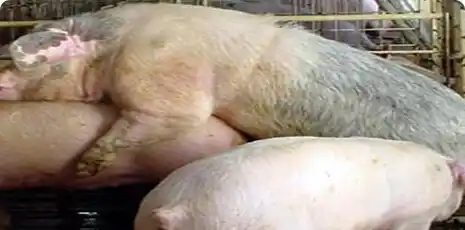
A sow in heat may attempt to mount other sows or allow other pigs to mount her. This behavior is especially noticeable in group-housed animals.
However, mounting alone should not be used as the only indicator. Farmers should confirm heat using the standing response or back-pressure test.
4. Standing to Be Mounted
A sow that is truly ready for mating will often stand firmly while another pig mounts her. This is one of the clearest behavioral indicators of standing heat.
The sow may become quiet and remain motionless instead of trying to escape.
5. Swollen or Red Vulva
Some sows may develop a swollen, reddened, or moist vulva before or around the time of heat.
Although this can be a useful warning sign, physical changes are not always reliable indicators of the exact breeding time. Vulvar swelling and discharge can appear before standing heat, so farmers should combine these observations with behavioral heat detection.
6. Mucus Discharge
A clear or slightly cloudy mucus discharge may sometimes be visible around the vulva during estrus.
Again, discharge should not be considered sufficient proof that the sow is ready for mating. The standing reflex remains a more useful indicator.
7. Increased Vocalization and Interaction With the Boar
Some sows become more vocal and responsive when exposed to a boar. They may approach the boar, sniff him, push against the pen, or show increased interest.
Regular boar exposure can therefore help farmers detect heat more accurately.
When Do Sows Come Into Heat After Weaning?
One of the most important periods for heat detection is immediately after weaning.
Most sows come into heat approximately 3–7 days after weaning, although nutrition, body condition, litter size, parity, boar exposure, genetics, season, and management can affect the timing.
Farmers should therefore monitor weaned sows every day rather than assuming that every sow will come into heat on exactly the same day.
A sow that does not show heat within the expected period should be monitored carefully. Poor body condition, inadequate nutrition, illness, heat stress, or reproductive problems may contribute to delayed or missed estrus.
What Is the Best Time to Mate a Sow?
Timing mating correctly is critical because ovulation occurs during the later part of estrus. The objective is to have viable sperm present in the reproductive tract before or around ovulation.
For natural mating, many producers mate the sow more than once during standing heat. A common approach is to provide the first service after standing heat is confirmed and repeat the mating approximately 24 hours later while the sow remains receptive. Commercial breeding programs may use different protocols depending on heat detection frequency, genetics, semen quality, and farm management.
For artificial insemination, timing should follow the specific protocol used by the farm or veterinarian. When heat is checked twice daily, professional swine-reproduction guidance commonly recommends insemination at intervals after the onset of standing heat rather than waiting until the end of estrus.
Simple Practical Breeding Guide
Heat detection Recommended approach
Sow not showing standing heat Continue monitoring
Standing heat detected Confirm with boar/back-pressure test
Natural mating Mate during standing heat and consider a repeat service approximately 24 hours later
Artificial insemination Follow the farm’s AI timing protocol based on onset of standing heat
Sow remains in heat Continue monitoring and follow veterinary/breeding protocol
The exact breeding schedule should be adjusted according to whether you are using natural mating or artificial insemination and according to the advice of your veterinarian or breeding technician.
Why Correct Mating Time Matters
Breeding too early or too late can reduce reproductive efficiency. Correct timing increases the likelihood that viable sperm will be available when ovulation occurs.
Good breeding management can help farmers achieve:
Higher conception rates
Better farrowing rates
Larger and healthier litters
Fewer repeat services
Reduced breeding costs
Better use of breeding boars
Improved piglet production
More predictable farrowing dates
The economic benefit can be significant because every missed breeding opportunity may extend the number of non-productive days in the herd.
Nutrition Also Affects Sow Fertility
Heat detection and mating are only part of successful sow reproduction. Nutrition and body condition are equally important.
A sow that loses excessive body weight during lactation may take longer to return to estrus after weaning. Farmers should provide balanced feed, adequate clean water, minerals, and proper management throughout pregnancy and lactation.
Recently weaned sows should receive sufficient energy and nutrients to support reproductive recovery and subsequent breeding. Undernutrition can negatively affect ovarian activity and ovulation.
What If a Sow Does Not Show Heat?
If a healthy-looking sow does not return to heat after weaning, do not immediately assume that she is infertile.
Possible factors include:
Poor body condition
Excessive weight loss during lactation
Inadequate nutrition
Heat stress
Disease
Poor heat detection
Lack of adequate boar stimulation
Reproductive disorders
Seasonal effects
Silent heat
Farmers should keep accurate records of farrowing dates, weaning dates, heat detection, mating dates, return to heat, and pregnancy outcomes. Good records make it easier to identify reproductive problems within the herd.
How Aaron Vet Farms Ltd Can Help Pig Farmers
Successful pig production requires more than simply mating animals. Farmers need healthy breeding stock, appropriate nutrition, disease prevention, proper housing, accurate heat detection, and good reproductive management.
Aaron Vet Farms Ltd supports farmers with practical livestock and veterinary solutions designed to improve farm productivity. Whether you are establishing a piggery, improving an existing herd, or experiencing reproductive challenges, getting professional advice can help you make better management decisions.
Conclusion
Identifying the signs of heat in sows is one of the most important skills in profitable pig farming. The strongest indication is usually the standing response when the sow is exposed to a boar and tested with back pressure.
Because estrus normally lasts several hours to several days and ovulation occurs later in the heat period, mating should be carefully timed rather than performed simply because physical signs such as vulvar swelling are observed.
For better results, farmers should combine accurate heat detection with good nutrition, healthy breeding animals, proper boar management, accurate records, and veterinary guidance.
If you are looking for pig farming advice, veterinary services, quality animal feeds, or other livestock solutions in Uganda, contact Aaron Vet Farms Ltd for professional support.