
The Complete Poultry Vaccination Schedule Every Farmer Should Follow
Learn the complete poultry vaccination schedule every farmer should follow. Protect your chickens from deadly diseases with expert guidance from Aaron Vet Farms Ltd.
Healthy chickens are the foundation of every profitable poultry business. Whether you are raising broilers for meat or layers for egg production, disease prevention is far less expensive than treating sick birds. One of the most effective ways to protect your flock is by following a proper poultry vaccination schedule.
At Aaron Vet Farms Ltd, we have helped hundreds of poultry farmers improve flock health through quality vaccines, professional veterinary support, and practical farm management advice.
Why Poultry Vaccination Is Important
Vaccination prepares your chickens’ immune systems to fight dangerous diseases before they occur. Without vaccination, poultry flocks are highly vulnerable to outbreaks that can wipe out an entire farm within days.
Benefits of vaccination include:
Reduced poultry mortality
Better egg production
Faster growth rates
Improved feed conversion
Lower treatment costs
Increased farm profitability
Stronger flock immunity
Reduced disease transmission
Vaccination is an investment that protects your business and ensures sustainable poultry production.
Common Poultry Diseases Prevented by Vaccination
A proper vaccination program protects birds against several deadly diseases, including:
Newcastle Disease
Gumboro (Infectious Bursal Disease)
Marek’s Disease
Fowl Pox
Infectious Bronchitis
Fowl Typhoid
Coccidiosis (through vaccination or preventive medication)
Avian Encephalomyelitis
These diseases can significantly reduce growth, egg production, and survival if left uncontrolled.
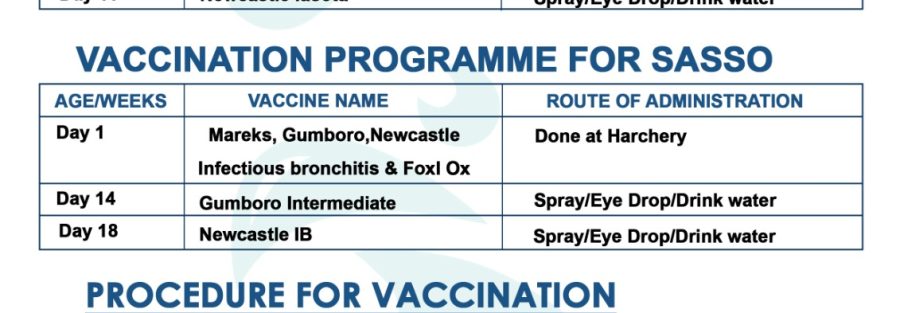
Complete Poultry Vaccination Schedule
The following schedule is commonly recommended for commercial poultry farms. Always consult a qualified veterinarian because vaccine programs may vary depending on disease prevalence and production systems.
Bird Age Vaccine Purpose
Day 1 Marek’s Disease Prevents paralysis and tumors
Day 5–7 Newcastle Disease (Lasota/Hitchner B1) Protects against Newcastle Disease
Day 10–14 Gumboro (IBD) Prevents Infectious Bursal Disease
Day 18–21 Second Gumboro Vaccine Strengthens immunity
Week 3–4 Infectious Bronchitis Protects the respiratory system
Week 4–6 Fowl Pox Prevents skin and mouth lesions
Week 6–8 Newcastle Booster Maintains immunity
Week 8–10 Fowl Typhoid Prevents bacterial infections
Week 10–12 Infectious Coryza (where recommended) Prevents respiratory disease
Before Lay Egg Drop Syndrome & Newcastle Booster Improves protection during egg production.
Broiler Vaccination Schedule
Broilers have a shorter production cycle, so their vaccination program is simpler.
Typical schedule:
Day 1
Marek’s Disease (usually at hatchery)
Day 5–7
Newcastle Disease
Day 10–14
Gumboro Vaccine
Day 18
Gumboro Booster
Day 21–28
Newcastle Booster
Because broilers are marketed early, additional vaccines are usually unnecessary unless recommended by a veterinarian.
Layer Vaccination Schedule
Layers remain in production for over a year, making comprehensive vaccination essential.
Layers require:
Marek’s Disease
Newcastle Disease
Gumboro
Fowl Pox
Infectious Bronchitis
Fowl Typhoid
Egg Drop Syndrome
Infectious Coryza (where applicable)
Regular Newcastle boosters during the laying period
Following the correct schedule helps maintain consistent egg production and reduces losses.
Best Practices During Vaccination
Vaccines are only effective when administered correctly. Farmers should follow these important guidelines:
Store Vaccines Properly
Most poultry vaccines require refrigeration between 2°C and 8°C. Improper storage can render vaccines ineffective.
Vaccinate Healthy Birds Only
Avoid vaccinating birds that are already sick or severely stressed.
Use Clean Equipment
Dirty syringes, droppers, or drinkers may contaminate vaccines and reduce effectiveness.
Observe Correct Dosage
Always follow the manufacturer’s instructions or seek veterinary guidance.
Use Clean Drinking Water
For vaccines administered through drinking water, avoid chlorinated water. Use clean, cool water and ensure birds consume the vaccine within the recommended time.
Reduce Stress
Avoid transporting birds, changing feed, or introducing new birds immediately before or after vaccination.
Common Vaccination Mistakes Farmers Should Avoid
Many vaccine failures occur due to poor management rather than ineffective vaccines.
Avoid these mistakes:
Missing vaccination dates
Incorrect vaccine storage
Using expired vaccines
Wrong dosage
Mixing vaccines incorrectly
Vaccinating unhealthy birds
Poor farm hygiene
Failure to maintain cold chain
Not consulting veterinary professionals
A well-planned vaccination program combined with good biosecurity significantly improves flock health.
Additional Disease Prevention Tips
Vaccination alone cannot eliminate disease risks. Farmers should also implement strong biosecurity measures.
These include:
Restricting visitor access
Regular cleaning and disinfection
Proper litter management
Rodent and wild bird control
Quality feed and clean water
Isolation of sick birds
Proper ventilation
Routine veterinary checkups
Combining vaccination with biosecurity creates the strongest defense against poultry diseases.
Why Choose Aaron Vet Farms Ltd?
At Aaron Vet Farms Ltd, we are committed to helping poultry farmers achieve higher productivity through reliable veterinary services and quality farm inputs.
We provide:
Professional vaccination services
High-quality poultry vaccines
Veterinary consultation
Poultry disease diagnosis
Biosecurity training
Poultry management support
Day-old chicks
Farmer extension services
Our experienced team works with both small-scale and commercial poultry farmers to ensure healthy, productive flocks.
Final Thoughts
A proper poultry vaccination schedule is one of the most important investments any poultry farmer can make. By vaccinating birds at the right time and combining vaccination with effective biosecurity practices, farmers can dramatically reduce disease outbreaks, improve flock performance, and increase profits.
Whether you are raising broilers, layers, or indigenous chickens, following a structured vaccination program will help protect your investment and ensure long-term success.
For expert veterinary advice, quality vaccines, and professional poultry management services, trust Aaron Vet Farms Ltd—your reliable partner in modern poultry farming.