
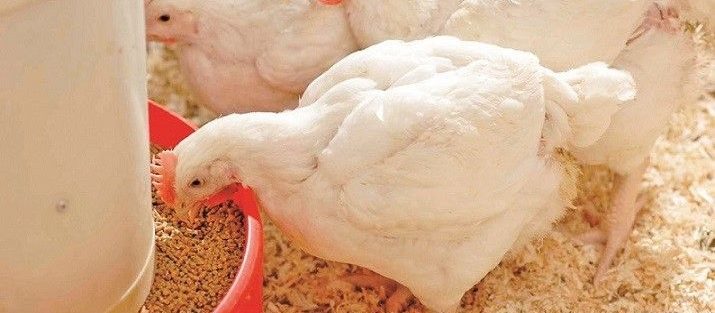
How Much Feed Does a Broiler Eat in 6 Weeks? A Complete Guide by Aaron Vet Farms Ltd
Broiler farming is one of the most profitable agricultural ventures in Uganda — and indeed across Africa — when done right. But here’s the big question many poultry farmers ask:How much feed does a broiler chicken eat in 6 weeks?
Feed is the single biggest cost in broiler production, typically accounting for 60–70% of your total expenses. Knowing how much feed your birds will eat helps you budget properly, prevent wastage, and boost profitability.What Is a Broiler?
A broiler chicken is a bird bred specifically for meat production. These birds grow rapidly and are usually ready for market in 5–7 weeks. Top performance broiler breeds include Cobb 500, Ross 308, Arbor Acres, and Hubbard — all known for fast growth and efficient feed conversion.Why Feed Consumption Matters
Feed isn’t just fuel — it determines: Growth rate Feed Conversion Ratio (FCR) Market weight Profit margins
Understanding feed intake lets you plan properly, reduce waste, and maximise returns from every bird you rear.
Typical Feed Consumption of a Broiler in 6 Weeks
While exact figures vary by breed, feed quality, management, and environment, industry‑standard estimates show that: A single broiler will eat about 4.5 to 5 kg of feed by the end of 6 weeks. In some practical settings, this can be closer to 4–4.8 kg per bird at market weight (around 2.5–3.0 kg live weight).
Here’s what that looks like in practice:
Week Approx. Feed Consumed (kg) Cumulative Feed Intake (kg)
Week 1 0.16–0.20 ~0.18Week 2 0.35–0.40 ~0.55
Week 3 0.60–0.70 ~1.25
Week 4 0.90–1.00 ~2.25
Week 5 1.1–1.20 ~3.35
Week 6 1.3–1.4 ~4.65
Total: ~4.0–4.8 kg per bird by 6 weeks of age — depending on feed quality, management, and breed.
In practical terms:
If you have 100 broilers, expect your total feed requirement for the full 6‑week cycle to be around 400–480 kg of broiler feed.Feed Stages: What to Feed & When
To maximise efficiency, broiler feed is usually given in phases:1. Starter Feed (Day 1–14)
High protein (22–24%)Promotes rapid early growth and immune development
Feed intake per bird: ~0.5–0.8 kg over 2 weeks
2. Grower Feed (Day 15–28)
Moderate protein (19–21%)Supports muscle development
Intake per bird: ~1.0–1.3 kg over 2 weeks
3. Finisher Feed (Day 29–42 — up to 6 weeks)
Lower protein but higher energyMaximises meat yield
Intake per bird: ~2.0–2.5 kg over 2 weeks
Total Feed Intake ≈ Starter + Grower + Finisher = ~4.0–4.8 kg by 6 weeks.
Feed Conversion Ratio (FCR): Your Key Performance Metric
One of the most important metrics farmers track is the Feed Conversion Ratio (FCR) — the amount of feed needed to produce 1 kg of live weight.
 Good commercial broilers have an FCR of about 1.6 to 1.8.
This means:If your broilers have an FCR of 1.6 — and you aim for 2.5 kg live weight —
Feed required per bird ≈ 1.6 × 2.5 kg = 4.0 kg of feed.
Lower FCR = higher efficiency = higher profit.
How Many Bags of Feed Will You Need
Let’s assume a standard 25 kg bag of broiler feed (starter, grower, or finisher): For 100 broilers at ~4.5 kg feed each:
Total = 100 × 4.5 kg = 450 kg total feed.Number of 25 kg bags: 450 ÷ 25 = 18 bags.
For 200 broilers:
200 × 4.5 kg = 900 kg total feed ≈ 36 bags.These calculations help you budget ahead and ensure uninterrupted supply.
Tips to Improve Feed Efficiency
Getting the most from your broiler feed doesn’t just save money — it improves bird health and production. Here’s how:
 Provide clean, fresh water 24/7
Broilers drink 2.5–3 times more water than feed. Clean water boosts feed intake and improves digestion. Maintain optimal temperature
Starter period should be warm (~32–35°C) and gradually reduce as birds age. Follow strict feeding schedules
Avoid abrupt feed changes — transition gradually between starter, grower, and finisher diets. Avoid overcrowding
Too many birds per square meter stresses birds and reduces feed intake and efficiency. Monitor health and hygiene
Sick birds eat less and convert feed poorly.Frequently Asked Questions (FAQs)
1. How much feed does a broiler eat per day?
Daily intake depends on age:Week 1: ~25–30 g/day
Week 3: ~90–105 g/day
Week 6: ~180–200 g/day
2. Why does feed consumption increase as broilers grow?
As birds grow, their energy needs increase. Their gastrointestinal system matures, and they eat more to support rapid muscle and weight gain.3. How can I calculate feed for 500 broiler chicks?
Multiply your per‑bird feed estimate by flock size:For 500 birds × ~4.5 kg each = 2250 kg total feed
This equals 90 bags of 25 kg feed.
4. Does broiler feed consumption vary by breed?
Yes. Fast‑growing breeds like Cobb 500 and Ross 308 may eat slightly more but convert feed more efficiently, resulting in faster growth.5. Is feed the biggest cost in broiler farming?
Yes — feed typically accounts for around 60–70% of production costs, making it essential to manage efficiently.6. When should I switch from starter to grower feed?
Usually around day 14–21, but follow your feed packaging and growth targets.Conclusion: Mastering Feed for Maximum Profit
Understanding how much feed a broiler eats in a 6‑week cycle is one of the most valuable skills a poultry farmer can have. With intelligent planning and practical management, farmers can accurately predict feed costs, reduce wastage, and improve their Return on Investment (ROI).At Aaron Vet Farms Ltd, we’re committed to helping farmers succeed with the best feeds, expert guidance, and personalized support. Whether you’re raising 50 broilers or 500, knowing your feed requirements puts you a step ahead in this thriving agribusiness.