
How to Choose Durable Poultry Cages for Uganda’s Climate
Choosing the right poultry cage is one of the most important decisions for farmers planning to keep layers in Uganda. A good poultry cage should provide enough space for birds, support efficient feeding and watering, make cleaning easier, and withstand Uganda’s changing weather conditions. Since poultry houses can be exposed to high humidity, dust, heat, moisture, and sometimes heavy rainfall, farmers need cages made from strong and corrosion-resistant materials.
At Aaron Vet Farms Ltd, we help poultry farmers make practical decisions when investing in poultry cages, poultry equipment, chicks, feeds, and veterinary services. Whether you operate a small poultry project or a commercial layer farm, selecting durable cages can reduce replacement costs and improve farm efficiency.
Why Durable Poultry Cages Matter in Uganda
Uganda has a tropical climate with periods of high humidity and rainfall in many parts of the country. These conditions can affect poultry equipment, especially cages manufactured from low-quality materials.
Poor-quality cages may quickly develop rust, weak joints, broken wires, or damaged frames. This can increase maintenance expenses and create an uncomfortable environment for birds.
Durable poultry cages offer several advantages, including:
Longer service life
Better protection for chickens
Reduced maintenance and repair costs
Improved hygiene and cleaning
Efficient use of poultry house space
Better manure management
Easier feeding and egg collection
For farmers looking at poultry cages for sale in Uganda, durability should be considered alongside price.
1. Choose Galvanized Poultry Cages
One of the most important features to consider is the material used to manufacture the cage. Galvanized poultry cages are among the preferred options for commercial poultry farming because the metal receives a protective zinc coating that helps reduce corrosion.
This is particularly important in humid environments. Ordinary untreated metal can rust faster when exposed to moisture, reducing the strength and lifespan of the cage.
When comparing poultry cages in Uganda, ask the supplier about the quality of galvanization and the thickness of the metal used.
A strong galvanized cage may cost more initially, but the longer service life can make it more economical over time.
2. Check the Quality of the Wire
Not all poultry cages have the same wire strength. Thin or poorly manufactured wire can bend under pressure and may break after repeated use.
Before buying, inspect the cage carefully. Check whether:
The wire is strong and properly welded.
The cage does not easily bend when touched.
Welded joints are firm.
The doors open and close properly.
The wire spacing is appropriate for the chickens being kept.
For commercial layer farms, cage strength is especially important because cages may hold birds continuously for extended production periods.
3. Consider Uganda’s Humidity and Rainfall
Farmers should consider their local environment before choosing poultry cages. Areas experiencing high humidity require greater attention to corrosion resistance.
Your poultry house should also have proper ventilation and protection from direct rain. Even a high-quality cage may deteriorate faster when constantly exposed to moisture.
Good poultry house construction should include:
Proper roof overhangs
Adequate ventilation
Good drainage around the poultry house
Dry floors
Protection from direct rain
Regular cleaning and disinfection
Durable layer cages in Uganda perform best when they are installed in a properly designed poultry house.
4. Choose the Right Cage Design
The cage design should match the size and management system of your poultry farm.
Farmers can choose from different configurations depending on the number of birds and available space. Some systems are designed for smaller farms, while others are suitable for commercial layer operations.
A good cage system should allow easy access to:
Feeders
Drinkers
Eggs
Manure collection areas
Individual cage compartments
A practical design saves labor and makes daily farm management easier.
5. Check the Feeding and Drinking System
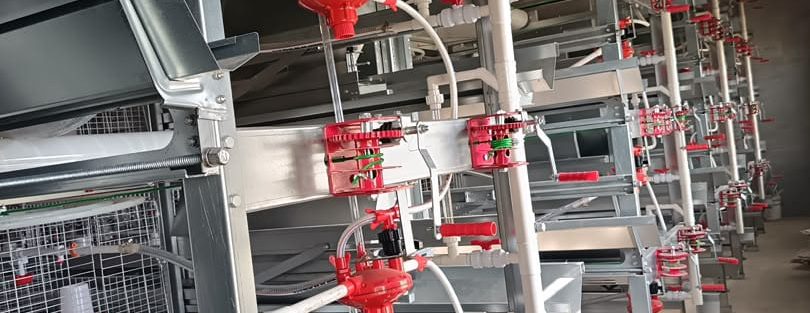
A durable cage is not only about the metal frame. The attached feeding and drinking systems should also be strong and easy to maintain.
Poor-quality drinkers can leak water and make the poultry house wet. Excess moisture can contribute to corrosion and create hygiene challenges.
When purchasing a cage system, check whether it has reliable:
Feed troughs
Drinking lines or nipple drinkers
Water pipes
Egg collection trays
Manure management systems
Efficient equipment can also reduce feed wastage and improve overall poultry farm management.
6. Think About the Number of Birds
Before buying cages, calculate how many birds you intend to keep. Avoid purchasing a system simply because it is advertised as cheap or high-capacity.
Overcrowding can cause stress, poor production, feather pecking, and other management problems. The cage dimensions should be appropriate for the type and number of birds.
Farmers considering 1000 layers in cages should carefully evaluate the cage configuration, house dimensions, feeding system, drinking system, and manure management arrangement before installation.
7. Compare Quality, Price and Long-Term Value
The cheapest poultry cage is not always the most affordable option.
For example, a low-cost cage may require frequent repairs or replacement because of rust, weak welding, or poor materials. A stronger cage may have a higher purchase price but provide a longer service life.
When comparing poultry cage prices in Uganda, look beyond the initial quotation. Ask:
What material is used?
Is the cage galvanized?
How thick is the wire?
How strong are the frames?
Does the supplier provide installation?
Are feeders and drinkers included?
Is there after-sales support?
What is the expected lifespan of the cage?
This approach helps farmers calculate the true value of their investment.
8. Buy From a Trusted Poultry Equipment Supplier
Your choice of supplier can have a major impact on the quality of your poultry project. A reliable supplier should be able to explain the different cage options and recommend a system according to your farm size and budget.
At Aaron Vet Farms Ltd, farmers can access poultry farming solutions designed to support profitable and efficient production. From poultry cages and equipment to quality chicks, feeds, and veterinary support, working with an experienced agricultural partner can help reduce costly mistakes.
9. Maintain Your Poultry Cages Properly
Even the best poultry cages need proper maintenance. Regular inspection can identify rust, loose joints, broken wires, leaking drinkers, and other problems before they become serious.
Farmers should regularly:
Clean cage surfaces
Remove manure properly
Check drinking systems for leaks
Inspect cage joints and doors
Repair damaged sections
Keep the poultry house dry
Use appropriate cleaning and disinfection procedures
Good maintenance can significantly extend the useful life of your poultry cages.
Conclusion
Choosing durable poultry cages for Uganda’s climate requires more than comparing prices. Farmers should consider galvanized materials, wire strength, cage design, humidity, ventilation, feeding and drinking systems, bird capacity, maintenance, and supplier reliability.
A well-designed cage system can improve hygiene, save space, reduce labor, and support better poultry management. Whether you are starting with a small flock or planning a commercial layer farming project in Uganda, investing in quality poultry cages can provide better long-term value.
Aaron Vet Farms Ltd is committed to supporting poultry farmers with practical solutions for successful poultry production, including poultry cages, chicks, feeds, and veterinary services.