
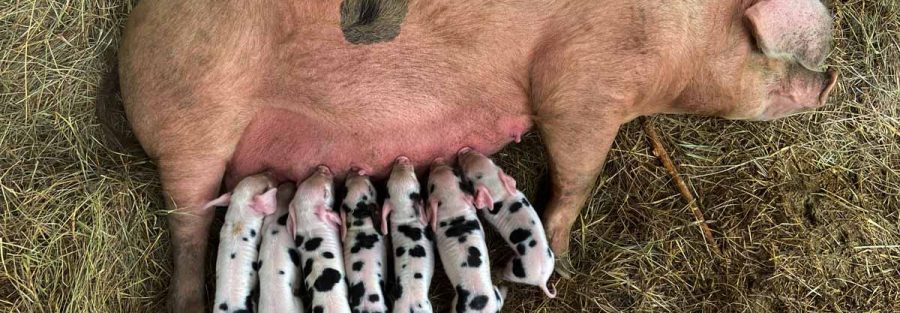
How Long Is a Pig Pregnant? Understanding the Pig Gestation Period
How long is a pig pregnant? A pig, specifically a sow, is pregnant for approximately 114–115 days, which is commonly remembered by farmers as “3 months, 3 weeks and 3 days.” However, the actual gestation period can vary slightly between individual sows. Many sows farrow within a broader range of approximately 110–117 days, while litter size, genetics, management and other factors can influence the exact timing.
Understanding the pig gestation period is essential for every pig farmer. Knowing when a sow was bred allows you to estimate her expected farrowing date, prepare a clean farrowing area, adjust feeding and monitor her closely as birth approaches.
At Aaron Vet Farms Ltd, we understand that successful pig farming starts with good reproductive management. Whether you are keeping a few breeding sows or operating a commercial pig farm, understanding pregnancy and farrowing can help you reduce losses and improve piglet survival.
How Long Is a Pig Pregnant?
The average pig pregnancy lasts about 114 days. It is also commonly described as approximately 115 days, depending on how the gestation period is calculated and the individual sow. Penn State Extension describes normal sow gestation as about 115 days, while recent extension information gives an average of approximately 114 days.
The popular farmer’s rule is:
3 months + 3 weeks + 3 days = approximately 114 days.
For example, if a sow is successfully bred on January 1, her expected farrowing date would be around April 25, although the actual birth date may occur somewhat earlier or later.
Farmers should therefore use the breeding date as a guide rather than assuming that every sow will give birth on exactly day 114.
What Is the Pig Gestation Period?
The pig gestation period is the time between successful fertilization and farrowing, which is the process of giving birth to piglets.
During this period, fertilized embryos develop into fully formed piglets inside the sow’s uterus. Early pregnancy involves embryo development and attachment to the uterus, followed by rapid fetal growth during later pregnancy.
According to Penn State Extension, major stages of development occur throughout the approximately four-month pregnancy. Embryo attachment occurs around days 12–15, while placental development continues during early pregnancy. Later in gestation, fetal growth and mammary development become increasingly important.
This means that the farmer’s job does not simply involve waiting for day 114. Proper sow pregnancy management should take place throughout the entire gestation period.
The 4 Main Stages of Pig Pregnancy
Understanding the different stages of pig pregnancy can help farmers provide appropriate care.
1. Early Gestation: Days 0–30
The first month is a critical period for embryo survival and pregnancy establishment.
Following mating and fertilization, embryos develop and move toward the uterus. Around days 12–15, embryos attach to the uterine lining. Placental development then progresses rapidly.
Stress, disease, poor nutrition and other management problems during this period can negatively affect reproductive performance.
Pregnancy can also be checked using ultrasound. Penn State Extension notes that pregnancy may be checked around day 30, when developing fluid-filled sacs can be observed.
2. Mid-Gestation: Days 30–77
During the middle stage of pregnancy, fetal development becomes more noticeable. Organs develop and bones begin to calcify.
The sow should receive appropriate nutrition, clean water and suitable housing. Farmers should also avoid unnecessary stress and rough handling.
A sow that enters pregnancy in poor body condition may require careful nutritional management to support both her own condition and developing piglets.
3. Late Gestation: Days 77–90
This is an important period because fetal growth accelerates and mammary development becomes more visible.
The sow’s abdomen becomes larger, and her udder may begin to develop as the body prepares for lactation.
Penn State Extension identifies late gestation as an important period for fetal growth and mammary development.
Farmers should begin paying closer attention to the sow’s condition and prepare the farrowing facilities.
4. Final Gestation: Days 90–114+
During the final weeks, piglets continue to mature and gain energy reserves before birth.
The sow’s udder becomes fuller, and behavioral changes may become more noticeable as farrowing approaches.
This is the time when farmers should make sure the sow has access to clean water, appropriate feed, a comfortable environment and a clean farrowing area.
Signs That a Sow Is Pregnant
Farmers often ask, “How can I tell if my pig is pregnant?”
Pregnancy should ideally be confirmed through appropriate reproductive monitoring rather than relying only on physical appearance.
Some useful indicators include:
The sow does not return to heat after breeding.
Her abdomen gradually increases in size as pregnancy progresses.
Her body condition changes.
Her mammary glands develop during late pregnancy.
Ultrasound can be used to confirm pregnancy.
The sow eventually shows signs of approaching farrowing.
A sow that does not return to heat after mating may be pregnant, but this alone does not guarantee pregnancy. Pregnancy diagnosis by a veterinarian or trained professional provides greater certainty.
Signs a Pig Is About to Give Birth
As the estimated farrowing date approaches, farmers should watch carefully for changes in the sow.
Common signs of impending farrowing include:
Udder development
The udder may become enlarged and tight as the sow prepares to produce colostrum and milk.
Nesting behavior
The sow may become restless and show nesting behavior such as rooting or pawing.
Swollen vulva
The vulva can become swollen and more prominent shortly before farrowing.
Restlessness
A sow that is close to farrowing may repeatedly stand up and lie down.
Milk or colostrum production
Milk secretion can be an indication that farrowing is approaching, although the timing can vary between sows.
Penn State Extension notes that udder tightening, vulva changes and nesting behavior can occur shortly before farrowing.
How to Calculate a Sow’s Expected Farrowing Date
One of the easiest ways to manage breeding sows is to keep accurate breeding records.
If you know the date on which the sow was successfully bred, count approximately 114 days forward to estimate the expected farrowing date.
For example:
Breeding date: 1 January
Expected farrowing: approximately 25 April
Another example:
Breeding date: 15 March
Expected farrowing: approximately 7 July
The date should be treated as an estimate because individual gestation length varies.
For commercial farmers, recording the breeding date, sow identification number, mating details and expected farrowing date can make reproductive management much easier.
What Affects the Length of Pig Pregnancy?
Although approximately 114–115 days is the normal target, individual pregnancies can vary.
1. Genetics
Different genetic lines can have differences in reproductive characteristics and gestation length.
2. Litter size
Litter size can influence when a sow farrows. Penn State Extension notes that smaller litters may be associated with earlier farrowing, while highly prolific sows with larger litters may sometimes farrow later.
3. Nutrition
Nutrition affects the sow’s body condition and fetal development. Pregnant sows require an appropriate supply of energy, protein, minerals, vitamins and water.
4. Health
Disease and reproductive health problems can interfere with pregnancy and may contribute to reproductive losses.
5. Stress and management
Poor housing, rough handling, inadequate feeding and environmental stress can negatively affect reproductive performance.
For this reason, farmers should focus on good pig farming management throughout pregnancy, rather than only concentrating on the final few days.
Feeding a Pregnant Sow
Feeding a pregnant sow correctly is essential for maintaining body condition and supporting fetal development.
The exact ration should depend on factors such as:
Sow body condition
Stage of gestation
Genetics
Previous reproductive performance
Feed quality
Farm management system
Veterinary or nutritional recommendations
Avoid sudden changes in feeding programs. Provide clean drinking water at all times and use balanced feeds suitable for breeding animals.
During late gestation, fetal growth and mammary development increase nutritional demands.
Farmers should work with a qualified veterinarian or animal nutrition professional when developing a feeding program for pregnant sows.
Preparing for Farrowing
Good farrowing preparation can make a major difference to sow and piglet welfare.
Before the expected farrowing date:
Clean and disinfect the farrowing area.
Provide adequate ventilation without exposing piglets to drafts.
Ensure the sow has clean drinking water.
Prepare appropriate piglet-warming equipment.
Keep the sow’s records available.
Monitor the sow closely as the expected date approaches.
Have veterinary assistance available when necessary.
Prepare basic farrowing and piglet-care supplies.
Moving a sow to an appropriate farrowing area before the expected date gives the farmer time to monitor her and maintain a clean environment. Penn State Extension notes that sows may be moved to farrowing facilities several days before their predicted farrowing date.
What Should You Do If a Sow Goes Beyond 114 Days?
A sow reaching day 114 does not necessarily mean there is a problem.
Some healthy sows farrow later than the average. Penn State Extension reports that most sows may farrow between approximately 110 and 117 days, with variation associated with factors including litter size and genetics.
Therefore, farmers should monitor the sow rather than automatically assuming something is wrong simply because she has reached day 114.
However, if the sow is significantly overdue, appears ill, shows signs of distress, has abnormal discharge, or begins labor without successfully delivering piglets, veterinary assistance should be sought promptly.
Never administer reproductive or farrowing medications without appropriate veterinary guidance. Farrowing aids such as prostaglandins and oxytocin require correct timing and professional oversight.
Why Understanding Pig Gestation Matters to Farmers
Understanding the pig gestation period helps farmers plan their entire production cycle.
Knowing when a sow is likely to farrow helps with:
Farrowing-house preparation
Feed planning
Labor scheduling
Piglet management
Vaccination and health planning
Record keeping
Weaning planning
Breeding schedules
Farm budgeting
Good reproductive records also help farmers identify problems. If a particular sow repeatedly has reproductive difficulties, poor litter performance or abnormal gestation lengths, those records can provide useful information for veterinary assessment.
Frequently Asked Questions About Pig Pregnancy
How many months is a pig pregnant?
A sow is pregnant for approximately 3 months, 3 weeks and 3 days, equivalent to roughly 114–115 days.
Can a pig give birth before 114 days?
Yes. Gestation length varies between sows. Some may farrow earlier than day 114, while others may farrow later.
How many piglets can a sow have?
The number varies according to breed, genetics, age, management and individual reproductive performance. Large litters are common in commercial pig production, but litter size should not be judged by gestation length alone.
How can I know when my pig will give birth?
Start with the breeding date and estimate approximately 114 days forward. Then monitor the sow for late-gestation changes such as udder development, restlessness, nesting behavior and vulva changes.
Can pregnancy be confirmed in pigs?
Yes. Pregnancy can be assessed using reproductive monitoring techniques, including ultrasound. Around day 30, ultrasound can help identify a developing pregnancy.
What is farrowing?
Farrowing is the term used for the process of a sow giving birth to her piglets.
Final Thoughts
So, how long is a pig pregnant? The simple answer is approximately 114–115 days, commonly remembered as 3 months, 3 weeks and 3 days. However, farmers should expect some natural variation rather than assuming every sow will farrow on exactly the same day.
Successful pig reproduction requires more than simply counting days. Farmers need accurate breeding records, proper nutrition, disease prevention, good housing, regular observation and timely veterinary support.
At Aaron Vet Farms Ltd, we encourage farmers to take a proactive approach to pig health and reproductive management. Healthy breeding sows, good feeding practices and careful pregnancy monitoring can contribute to stronger piglets and a more productive pig enterprise.
For farmers looking for professional guidance on pig farming, veterinary services, animal health, pig feeds, breeding management and livestock production, working with qualified animal-health professionals can help identify problems early and improve farm management decisions.
Start counting from the breeding date, prepare before the expected farrowing date, and monitor the sow throughout pregnancy. Good records today can mean healthier piglets tomorrow.