
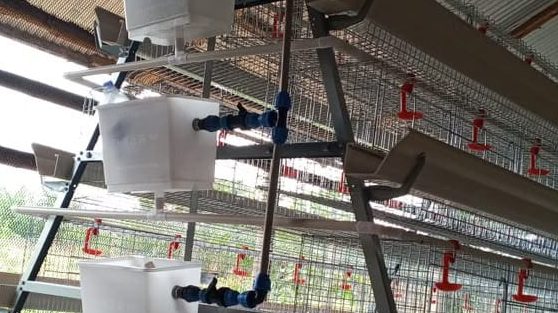
Complete Poultry Cage Farming Budget for 500, 1,000 and 5,000 Layers in Uganda
Starting a layer poultry farm is an attractive agribusiness opportunity in Uganda, especially as demand for eggs continues to grow in urban and rural markets. However, one of the biggest questions farmers ask before investing is: How much does it cost to start a poultry cage farm for 500, 1,000 or 5,000 layers?
A poultry cage farming budget should cover more than the price of cages. Farmers need to consider the poultry house, cages, layers or point-of-lay birds, feeding equipment, drinkers, water supply, electricity, vaccines, feeds, labor and other operating expenses.
At Aaron Vet Farms Ltd, we help poultry farmers make informed decisions about poultry housing, cages, feeding systems and flock management. This guide provides a practical starting point for estimating the investment required for 500, 1,000 and 5,000 layers in Uganda.
Why Choose Poultry Cage Farming?
Poultry cages are increasingly popular among commercial layer farmers because they make it easier to manage large numbers of birds in a relatively small space.
A properly designed layer cage system can help farmers:
Maximize available poultry house space
Reduce egg breakage and contamination
Improve feed and water management
Make egg collection easier
Monitor individual birds more effectively
Reduce wastage of feeds
Improve farm hygiene
Simplify manure management
However, cage farming only becomes profitable when the farmer combines good housing with quality birds, proper nutrition, vaccination, biosecurity and professional farm management.
Estimated Poultry Cage Farming Budget for 500 Layers
A 500-layer farm is suitable for farmers who want to enter commercial egg production on a manageable scale.
The major investment areas include:
Item Estimated Cost Range
Poultry house construction UGX 8–15 million
Layer cages UGX 4–8 million
500 point-of-lay birds UGX 15–25 million
Feeders and drinkers UGX 1–2 million
Water system UGX 500,000–1.5 million
Lighting/electrical installation UGX 500,000–1 million
Vaccines, medication & biosecurity UGX 500,000–1 million
Initial feed working capital UGX 3–6 million
Miscellaneous expenses UGX 500,000–1 million
Estimated total starting budget: UGX 33–59.5 million.
These are planning estimates rather than fixed market prices. Actual costs vary depending on the cage design, construction materials, location, bird age, breed and supplier.
Estimated Budget for 1,000 Layers
For farmers planning a larger commercial operation, 1,000 layers offer greater production potential but also require more capital and better management systems.
A typical budget may include:
Item Estimated Cost Range
Poultry house construction UGX 15–25 million
Layer cages UGX 8–15 million
1,000 point-of-lay birds UGX 30–50 million
Feeders/drinkers UGX 1.5–3 million
Water system UGX 1–2 million
Electricity and lighting UGX 800,000–1.5 million
Vaccination, medication & biosecurity UGX 1–2 million
Initial feed working capital UGX 6–12 million
Miscellaneous expenses UGX 1–2 million
Estimated total starting budget: UGX 64.3–112.5 million.
The final investment can be lower or higher depending on whether the farmer already owns land, has an existing poultry house or purchases equipment locally.
Estimated Budget for 5,000 Layers
A 5,000-layer poultry farm is a commercial-scale investment. At this level, farmers should think beyond cages and birds and develop a complete production system.
Possible investment requirements include:
Item Estimated Cost Range
Poultry house construction UGX 60–100 million
Layer cage systems UGX 40–75 million
5,000 point-of-lay birds UGX 150–250 million
Feeding and drinking equipment UGX 7–15 million
Water storage and supply UGX 3–7 million
Electricity/lighting UGX 3–6 million
Biosecurity, vaccines & medication UGX 3–6 million
Initial feed working capital UGX 30–60 million
Miscellaneous/contingency UGX 5–10 million
Estimated total starting budget: UGX 301–529 million.
For a project of this size, it is advisable to prepare a detailed business plan before construction begins. A small mistake in cage capacity, ventilation, water supply or stocking density can become expensive when thousands of birds are involved.
What Determines the Cost of Layer Cage Farming?
The cost of starting a poultry cage farm in Uganda varies from one farm to another. Some of the most important factors include:
1. Type of Poultry Cage
Farmers can choose from different cage configurations and capacities. The price depends on the cage material, number of tiers, bird capacity and whether the system is manual or automated.
2. Cost of Birds
The price of day-old chicks is different from the price of growers or point-of-lay pullets. Farmers purchasing ready-to-lay birds require more initial capital but can start egg production sooner.
3. Poultry House
Construction costs depend on the size of the house, roofing materials, flooring, ventilation, location and labor costs.
4. Feed Prices
Feed is one of the largest recurring expenses in layer farming. A farmer should budget for feed before bringing birds onto the farm.
5. Farm Equipment
Water tanks, drinkers, feeders, egg trays, lighting, weighing equipment and manure-handling systems all contribute to the overall investment.
6. Biosecurity and Veterinary Care
Vaccination, disease prevention and regular flock monitoring should never be treated as optional expenses. Preventing disease is generally cheaper than dealing with a major outbreak.
How to Reduce Poultry Farming Costs
Farmers can improve their return on investment by carefully planning before purchasing equipment.
First, calculate the required cage capacity based on the number of birds. Avoid buying cages that are too small or unnecessarily large.
Second, invest in a well-ventilated poultry house. Good ventilation helps maintain a healthier environment for layers.
Third, purchase quality birds from a reliable supplier. Cheap birds can become expensive if they have poor genetics, health problems or low production performance.
Finally, maintain accurate records for feed consumption, mortality, egg production, medication, sales and expenses. Good records help farmers identify where money is being lost.
Is Poultry Cage Farming Profitable in Uganda?
Yes, layer poultry farming can be profitable in Uganda, but profitability depends on several factors, including egg prices, feed costs, flock performance, mortality, disease control and farm management.
A farmer with 500 layers has a different financial risk from a farmer keeping 5,000 layers. Starting small can allow new farmers to gain experience before expanding.
The goal should not simply be to keep more birds. The goal is to achieve high egg production at a controlled cost per egg.
Why Work With Aaron Vet Farms Ltd?
Choosing the right poultry equipment and planning your farm correctly can make a major difference in long-term profitability.
Aaron Vet Farms Ltd supports farmers with poultry farming solutions, including layer cages, poultry management guidance and other farm inputs. Whether you are planning a 500-layer poultry farm, 1,000-layer farm or 5,000-layer commercial poultry project, proper planning can help you avoid unnecessary expenses.
Before investing, prepare a detailed budget based on your location, available infrastructure, preferred cage system, breed, feed requirements and production targets.
Final Thoughts
The cost of starting a poultry cage farm in Uganda depends heavily on the scale of production and the quality of infrastructure and equipment selected.
As a general planning guide, farmers may require approximately UGX 33–59.5 million for 500 layers, UGX 64.3–112.5 million for 1,000 layers, and UGX 301–529 million for 5,000 layers, depending on the assumptions used.
For accurate budgeting, farmers should obtain current quotations for poultry cages, point-of-lay birds, construction materials, feeds and farm equipment before making a final investment decision.
Aaron Vet Farms Ltd — helping farmers plan better, invest wisely and build productive poultry enterprises.